AWS has over 200 services, and most training programs try to survey too many of them too quickly. The result is a team that's seen a lot of slides and can operate almost none of it independently. A path that actually builds confidence looks different — narrower, more hands-on, and deliberately sequenced.
Start with IAM, not compute
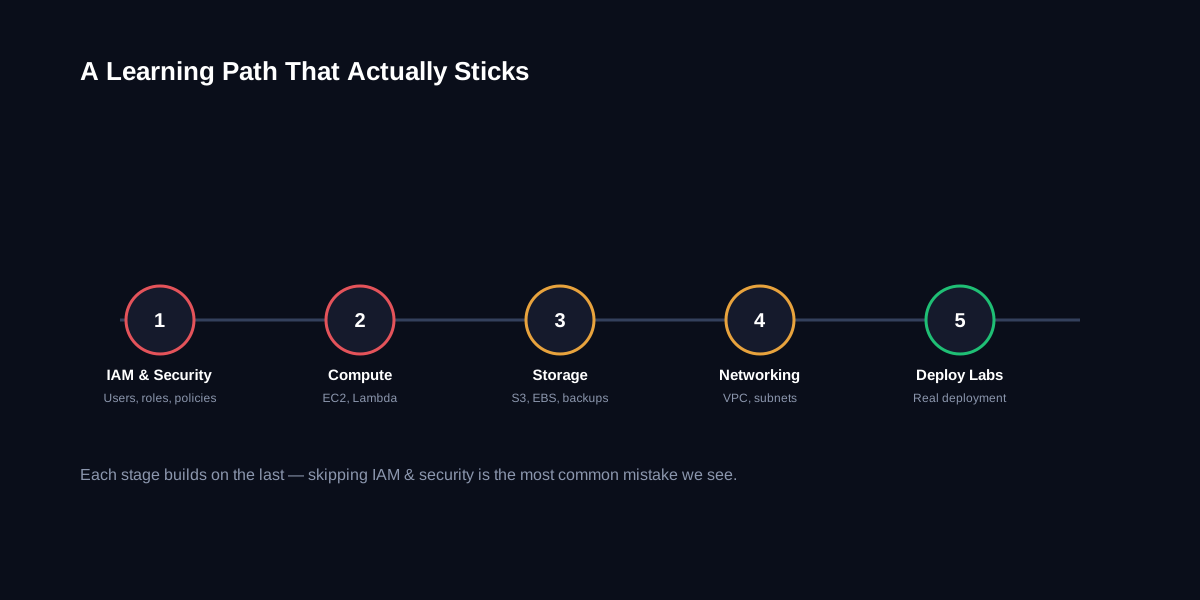
It's tempting to jump straight to spinning up a server, but the concept that underpins everything else in AWS is Identity and Access Management — users, roles, and policies that control who can do what. Teams that skip this early tend to develop bad habits (like using root credentials for everyday work) that become genuinely dangerous once real infrastructure is on the line. We teach IAM first, even though it's less exciting than launching a server.
Then compute, storage, and networking — in that order
Once access control makes sense, the rest builds naturally: EC2 and Lambda for compute, S3 for storage, and VPCs for networking. Each concept leans on the one before it — you can't reason well about network security groups until you understand what you're protecting, and you can't understand what you're protecting until compute and storage make sense.
- Compute — the difference between EC2, Lambda, and when to reach for each
- Storage — S3 storage classes and why backup strategy isn't an afterthought
- Networking — VPCs, subnets, and security groups, taught through a real deployment, not a diagram
Hands-on labs, not a certification cram
Certifications are a fine goal, but they're not the same thing as operational confidence. Our programs end with real deployment labs — building and breaking things in a sandboxed account — because that's the closest simulation of what actually happens on the job. A team that's deployed something themselves, watched it fail, and fixed it, retains far more than one that's only seen it demonstrated.