Most underperforming Google Ads accounts don't fail because of bad ad copy. They fail because of the plumbing underneath it — a flat account structure, missing conversion tracking, and reporting built around clicks instead of revenue. Fix the structure first, and the campaigns get dramatically easier to optimize.
Structure by intent, not by product
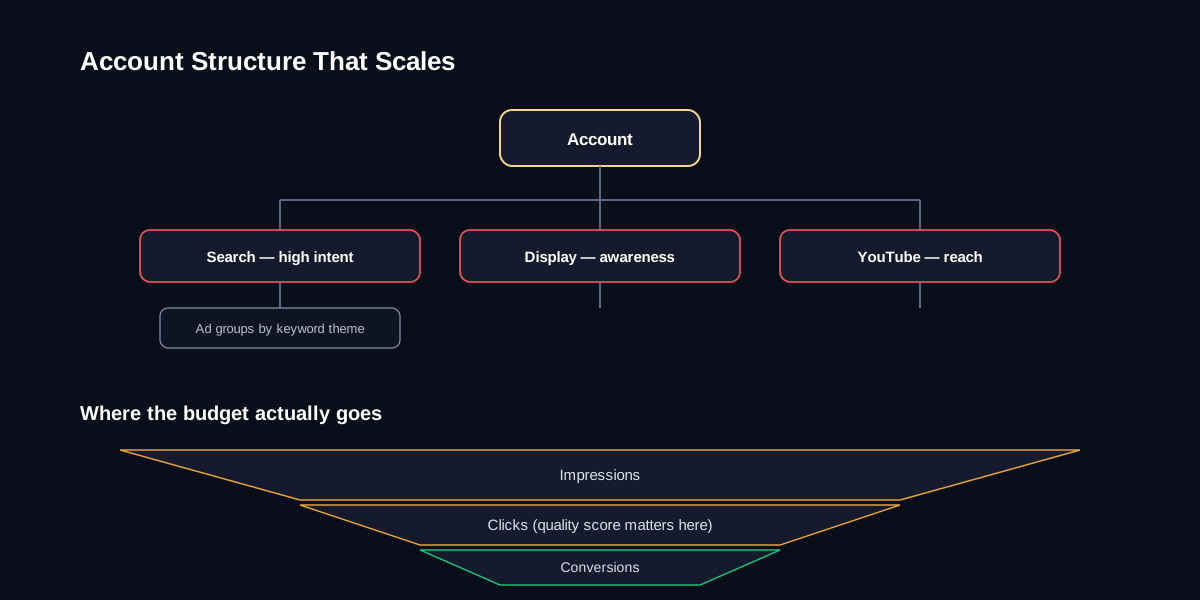
A common mistake is organizing campaigns purely by product line. It's tidier to look at, but it mixes searchers with completely different intent into the same budget and bidding strategy. We split by intent instead: a Search campaign for people actively looking to buy, a Display campaign for building awareness with people who aren't searching yet, and separate ad groups within Search organized tightly around specific keyword themes.
Tight ad groups matter more than people expect. When every keyword in a group shares the same intent, you can write ad copy that speaks directly to it — and that relevance is exactly what Google's Quality Score rewards.
Quality Score quietly controls your costs
Quality Score is Google's estimate of how relevant your ad and landing page are to the search. It's not vanity — it directly multiplies what you pay per click. Two advertisers bidding the same amount can pay wildly different prices depending on this score, and the highest-leverage way to improve it is tight ad groups plus a landing page that actually matches what the ad promised.
Conversion tracking is non-negotiable
Without accurate conversion tracking, "optimizing" a campaign is guesswork dressed up as strategy. Before we spend a single rupee of ad budget, we confirm the account can see actual outcomes — a form submission, a call, a purchase — not just clicks. This is also where negative keywords earn their keep: reviewing search term reports weekly to block the queries that generate clicks but never convert.
Reporting in plain language
A client shouldn't need to interpret a dashboard full of jargon to know if a campaign is working. Every report we send answers one question directly: is this spend paying back, and by how much? Everything else in the account exists to make that number better.